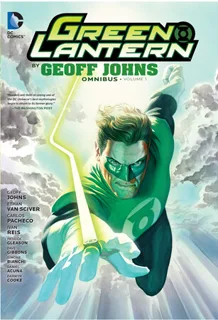
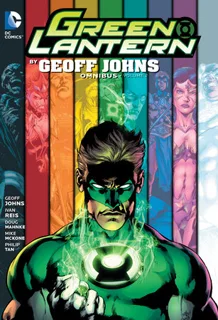
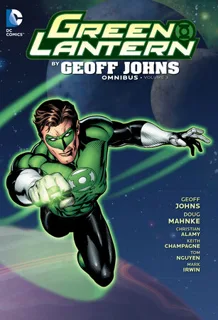
Explained
Geoff Johns and Green Lantern, Explained
From Hal Jordan's return to the emotional spectrum: a guide to Geoff Johns' 2004–2013 Green Lantern saga.
By 2004, Hal Jordan had passed through several distinct chapters: his fall as Parallax, his sacrifice in The Final Night, and his later role as the Spectre. Meanwhile, Kyle Rayner had carried the Green Lantern title into a new era. Green Lantern: Rebirth brought Hal back into the Corps' story without making those earlier chapters one continuous period of villainy. DC's historical overview traces those changes.
Johns' run made Hal's return the starting point for a larger conflict among the Lantern Corps.
The rebuild
Johns started with Green Lantern: Rebirth (2004–2005), a six-issue miniseries that restored Hal as Green Lantern. Its central retcon separated Parallax, the fear entity, from Hal himself and reinterpreted his actions in Emerald Twilight. That explanation was a later addition to the mythology, not the account originally given in the 1994 story. Whether that change strengthens Hal's story is an interpretive question; its effect on subsequent Lantern comics is central to this reading route.
But Rebirth was just the foundation. Over the next nine years, Johns systematically rebuilt the entire mythology from a single idea: emotion is light, and light can be wielded. The emotional spectrum — seven colors, seven corps, seven entities — turned Green Lantern from "space cops with rings" into a cosmic epic about the nature of feeling itself.
The saga
The run unfolds like a novel in chapters, each bigger than the last:
The Sinestro Corps War (2007) brought the yellow Corps into open conflict with the Green Lanterns. Rage of the Red Lanterns and Agent Orange (2008–09) developed rage and avarice. Then Blackest Night (2009–10) brought the competing lights into a struggle against the Black Lanterns. Our reading guide follows the setup, main stories, and aftermath with issue ranges and collection references.
War of the Green Lanterns (2011) was a turning point, not the end of Johns' run. The story continued in Green Lantern (2011), through the New 52 relaunch and Wrath of the First Lantern. Johns' finale is Green Lantern (2011) #20, released May 22, 2013, as confirmed by DC's issue listing and Johns' own announcement.
Why it worked
Three things. First, Johns respects continuity — he doesn't reboot, he redeems. Every embarrassing old story becomes load-bearing. Second, he writes mythology, not just plots — the spectrum, the oaths, the prophecies all feel ancient and inevitable. Third, he never forgot it's about people — Hal's recklessness, John's discipline, Guy's bluster, Kyle's heart. The rings are cool. The Lanterns matter more.
The Johns run is the backbone of this site's longer reading route. Start with Rebirth for the full saga, or try Secret Origin for a shorter introduction to Hal.
Publication dates and Hal's pre-Rebirth history reviewed November 4, 2026 against the linked DC sources. Judgments about the run's themes and storytelling are editorial interpretation. Source pages may reveal plot developments.
Buying the run? Compare the collected editions and see which chapters you already own.