In the main DC comics, a power ring channels energy from a particular light. For a Green Lantern that light is willpower. The Blue Lanterns draw on hope and the Sinestro Corps draws on fear. This is the seven-light framework developed during the Geoff Johns run. DC’s guide to the seven lights.
Can anger turn a green ring red? A standard green ring continues to channel willpower even when its wearer is angry. Special rings can work differently. In Green Lantern: New Guardians, Kyle Rayner’s white ring can draw on the different lights. DC’s explanation of rings that change color (later story details).
Each of the seven lights has a living entity, named under its color above. Blackest Night also sets two forces outside the seven against each other, black for death and white for life.
The Entities
These profiles discuss the entity mythology developed from Green Lantern: Rebirth through Blackest Night. The name of a host is not the same as an entity's publication debut. Read the linked profiles for issue references and spoiler boundaries.
Every light has a living soul — emotion incarnate. These are the beings the Corps draw their power from, and the forces behind the spectrum's wars.
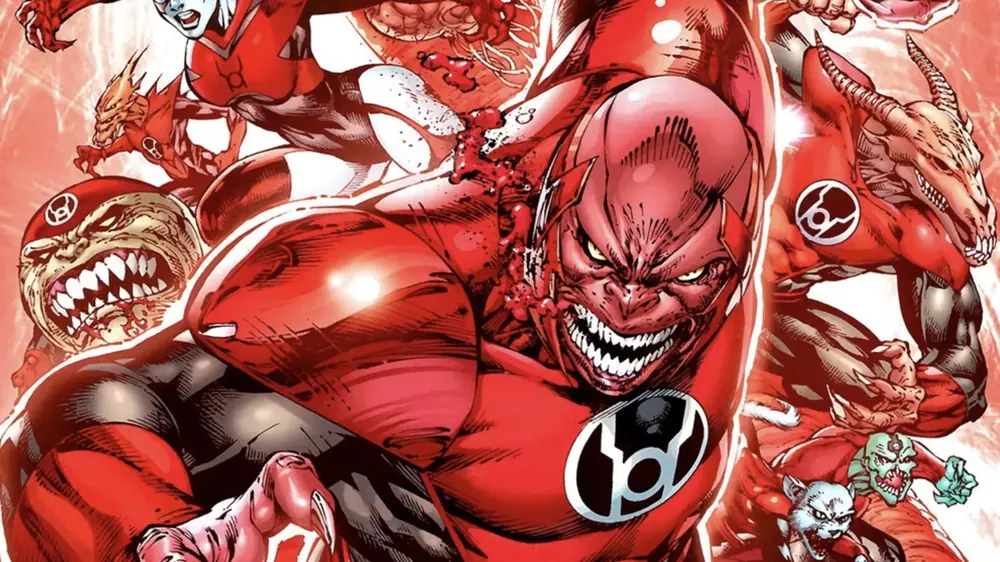
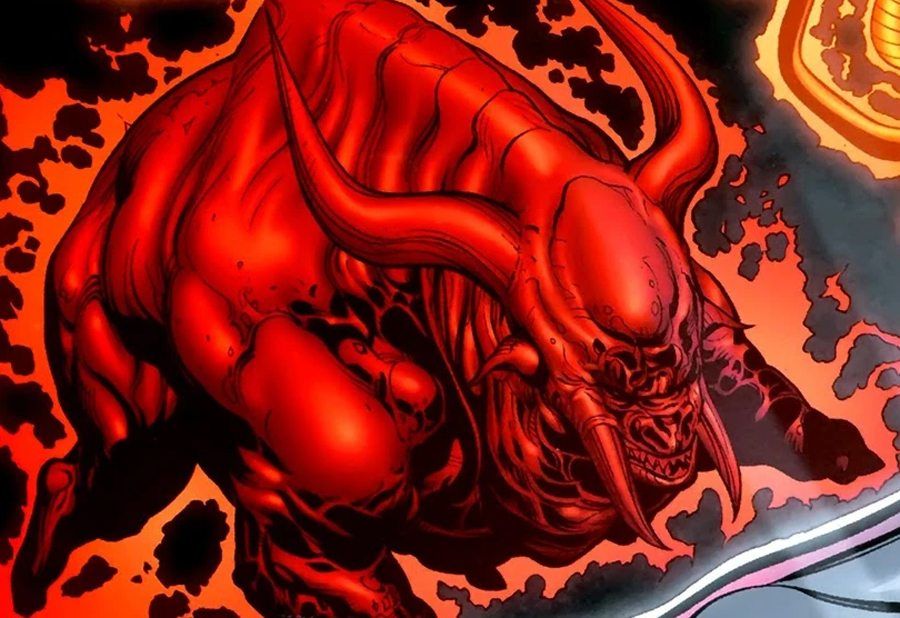
The embodiment of rage — a demonic red bull whose horned head mirrors the Red Lantern insignia. It was born from the first murder, and feeds on hatred the way living things feed on food. Whoever it takes as a host is driven into a roaring rampage of revenge, reason burned away. Atrocitus has long sought the Butcher as the true heart of his Corps' fury.
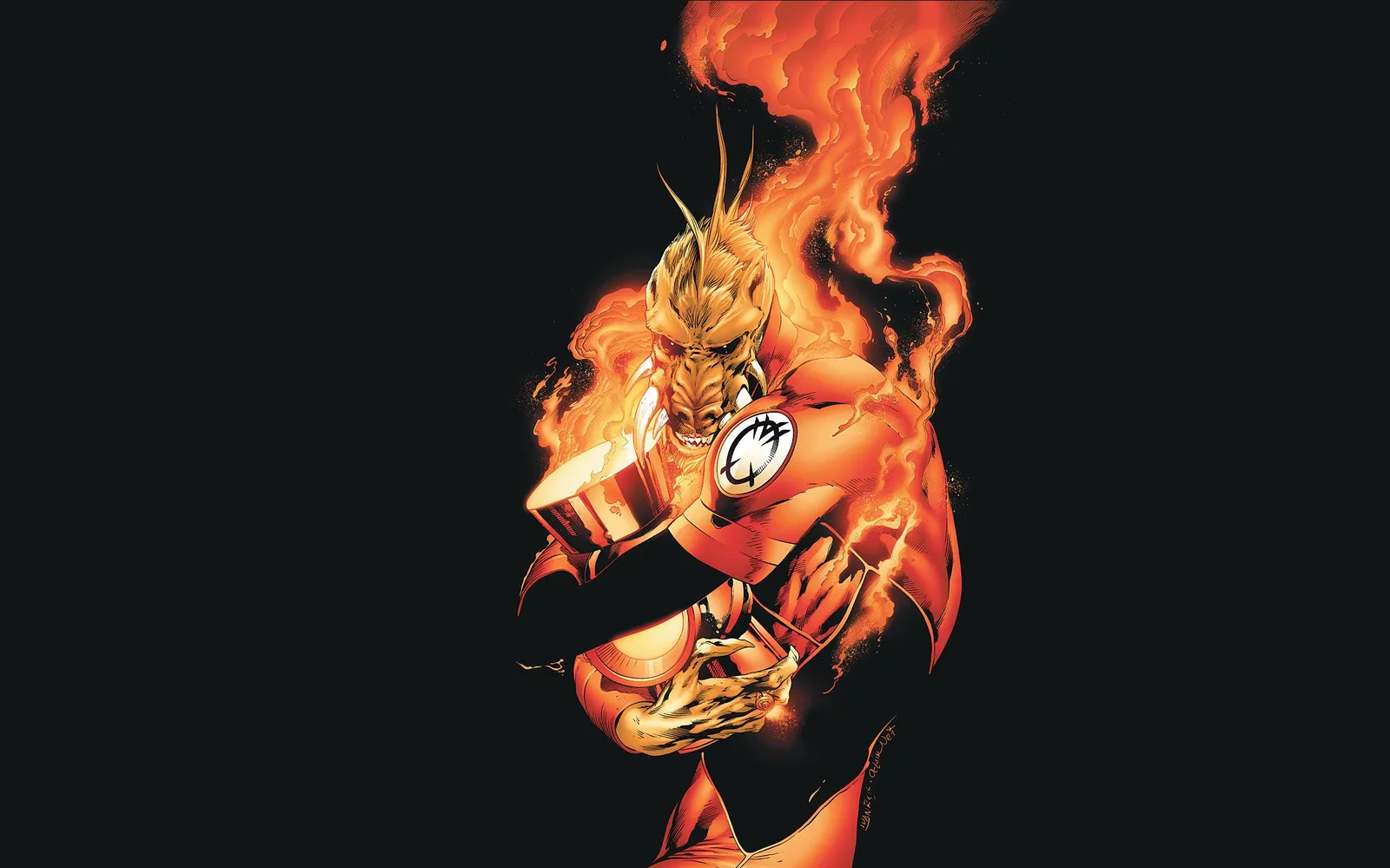
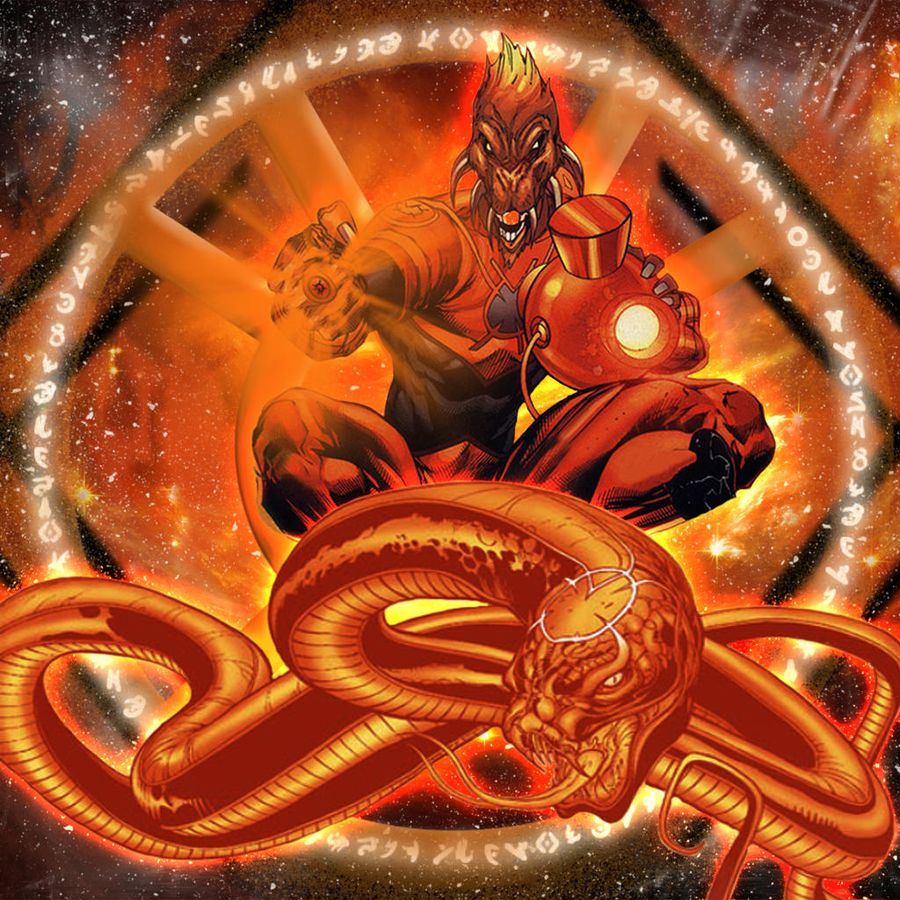
The serpent-like embodiment of avarice, born when the first creature ate more than it needed. It spent most of its existence trapped inside the Orange Lantern Central Power Battery on Okaara, where Larfleeze hoarded it like everything else he owns. Ophidian whispers to the greedy, inflaming their hunger until nothing matters more than what they crave. It is the hungriest of the entities, and the hardest to satisfy.
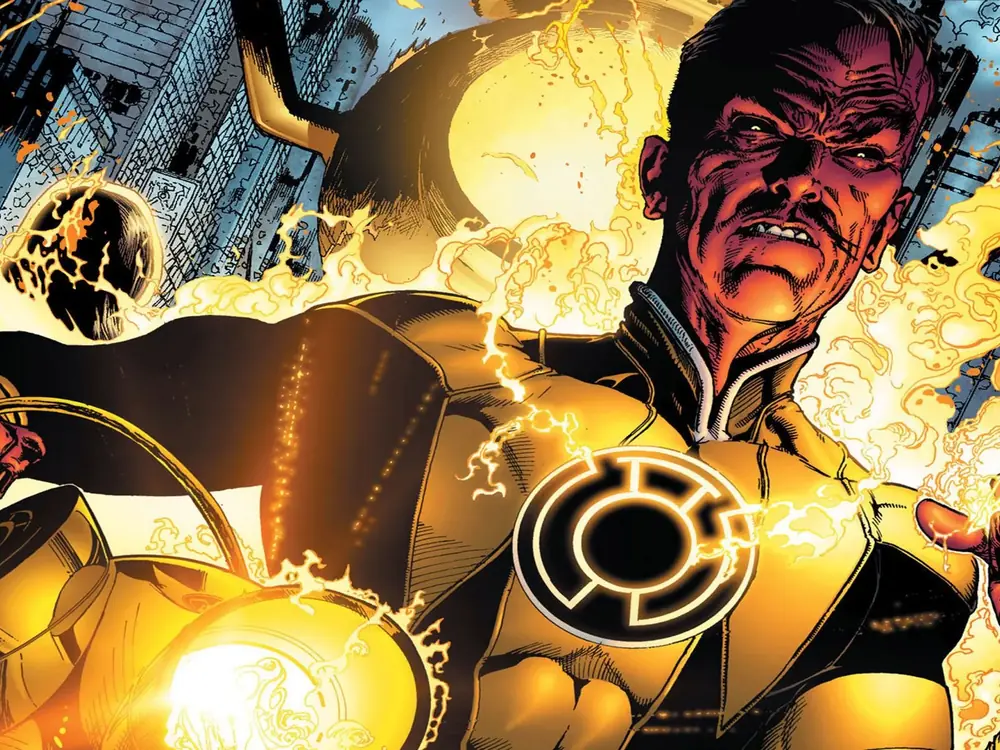
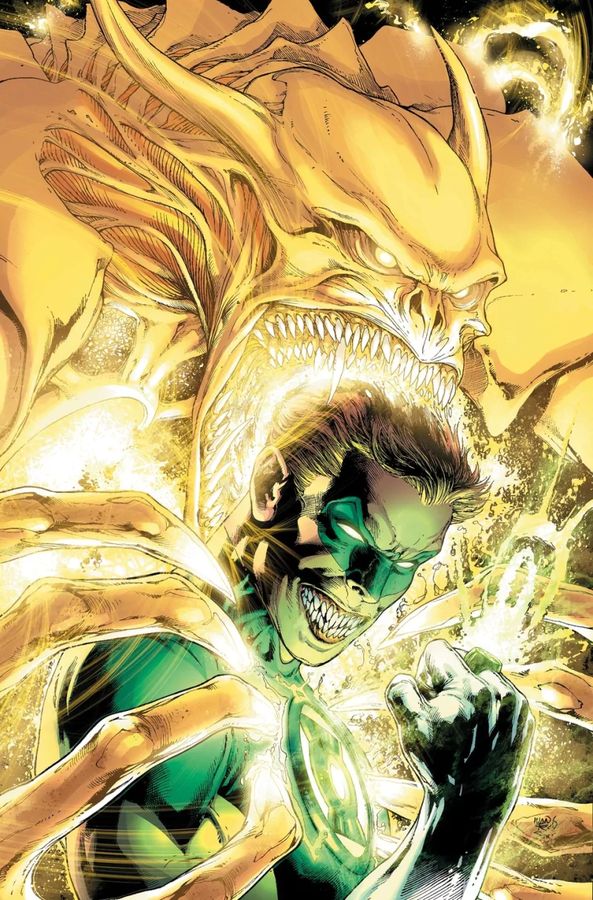
Parallax is the yellow fear entity, distinct from Hal Jordan's earlier use of the name. Green Lantern: Rebirth connects this possessing force to the Central Power Battery and the green rings' historic weakness against yellow. That later explanation changes how readers understand earlier stories.
Hal's Parallax identity: Green Lantern (1990) #50 (1994). Entity revelation: Green Lantern: Rebirth #3.
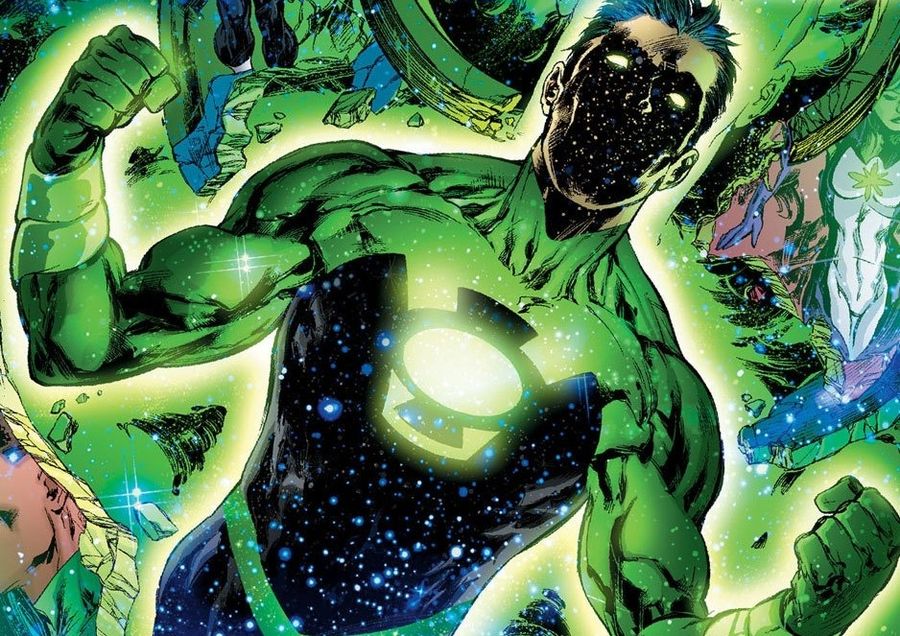
Ion is the green willpower entity. Kyle Rayner used the Ion identity before the mythology established a separate being; the Sinestro Corps era clarifies that distinction and explores the relationship between an entity and its host. The profile follows those publications in order.
Separate entity revealed: Green Lantern: Sinestro Corps Special #1 (2007); this is distinct from Kyle's earlier Ion identity.
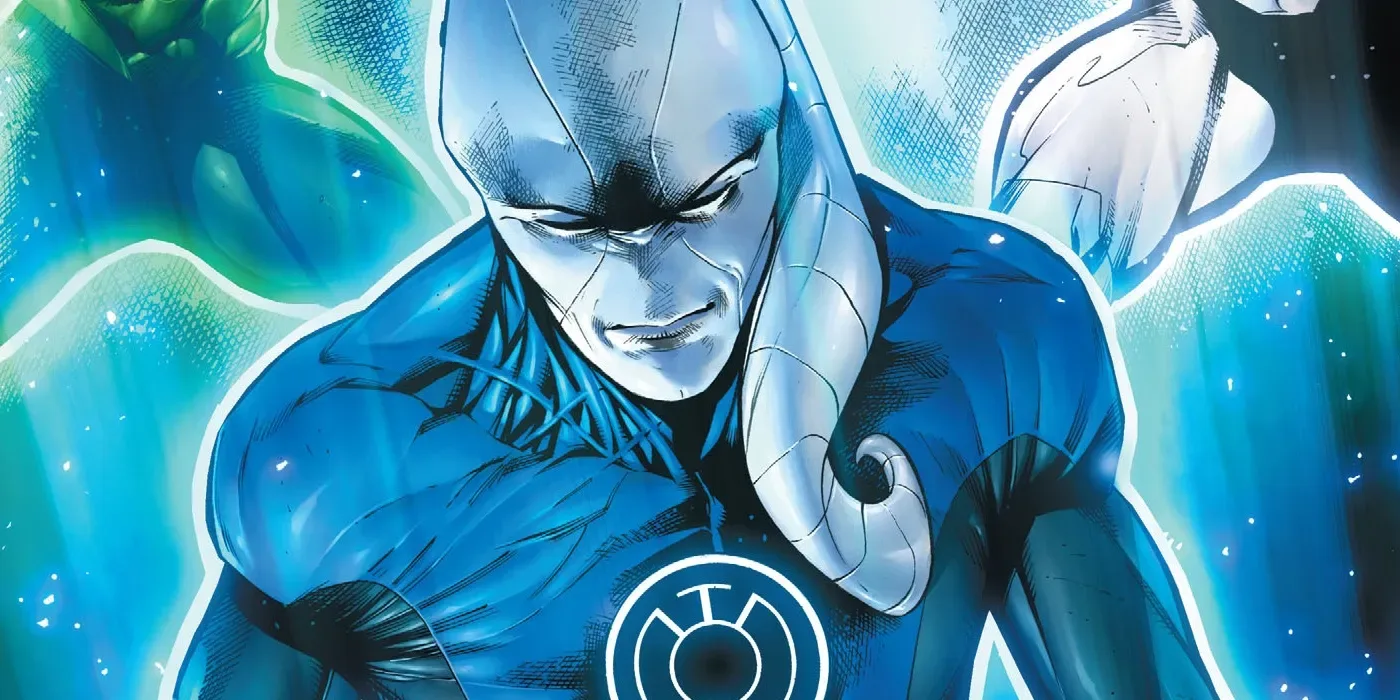
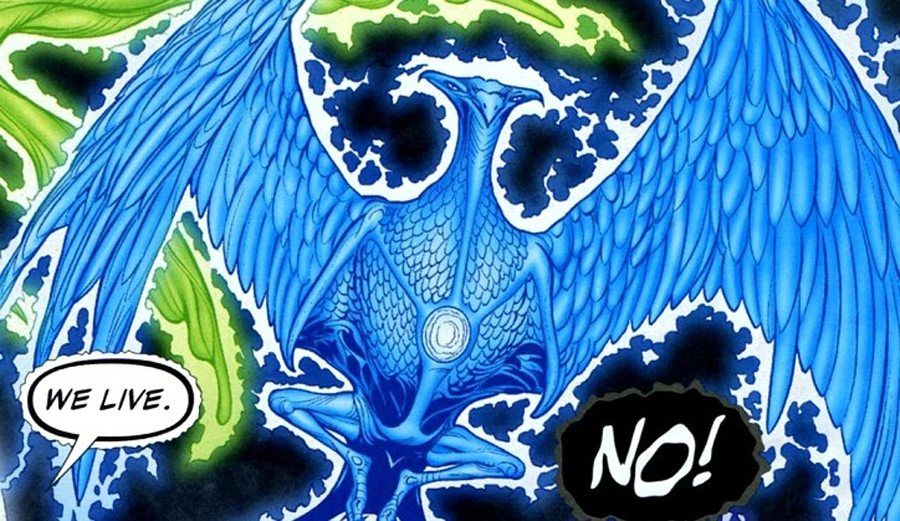
Adara is the entity associated with the blue light of hope. In the Johns-era comics, blue rings can boost green rings when the bearers are close to one another. See the example with Saint Walker and Hal Jordan.
The embodiment of compassion — an octopus-like indigo creature born when the first being felt another's pain. Like the Indigo Tribe itself, Proselyte is mysterious and rarely seen, drifting through the universe toward those who suffer. It can channel the light of any other Corps, making it one of the most versatile entities. Those it touches are flooded with empathy — whether they want it or not.
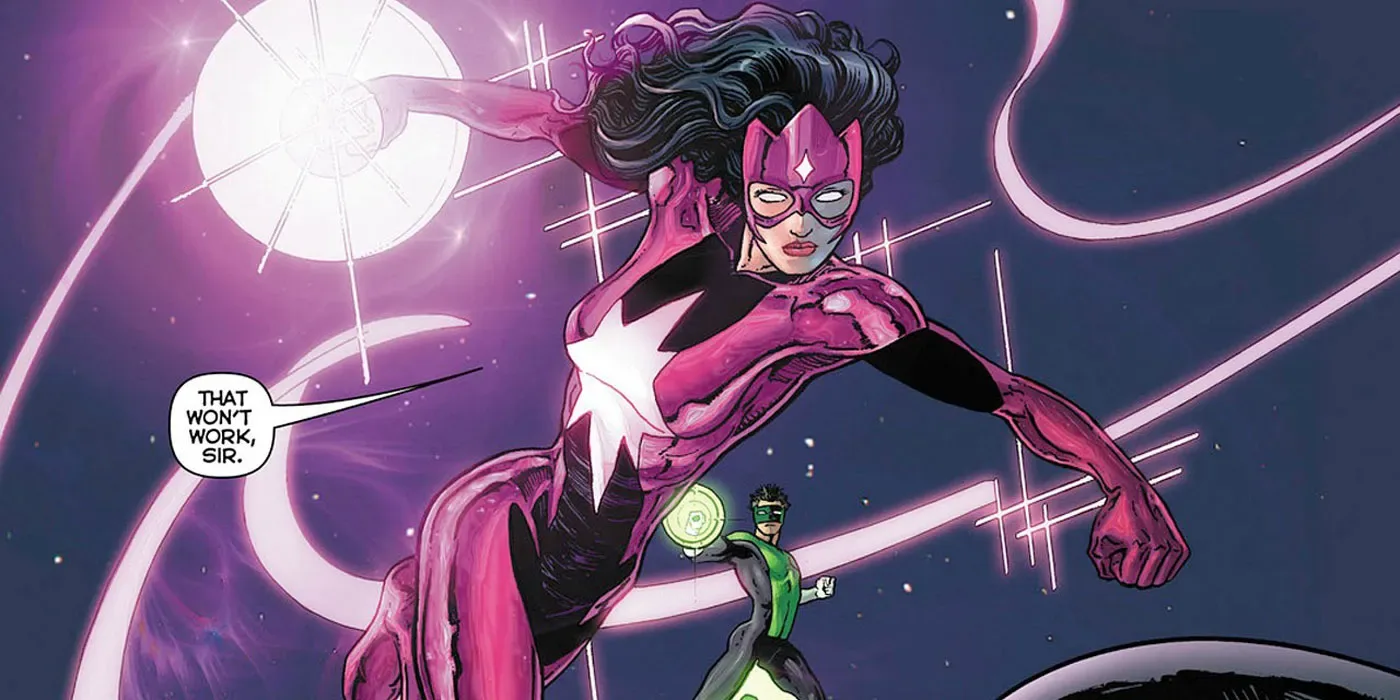
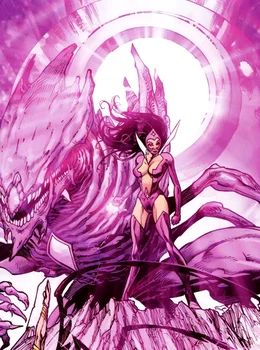
The embodiment of love — a violet dragon-like entity tied to the Star Sapphires of Zamaron. It appears in many forms, sometimes as a great winged beast, sometimes wearing a humanoid guise, and it feeds on love in all its forms — including love twisted into obsession. The Predator is the most mercurial of the entities: love can heal or consume, and the entity embodies both. The Star Sapphires draw their power from its light.
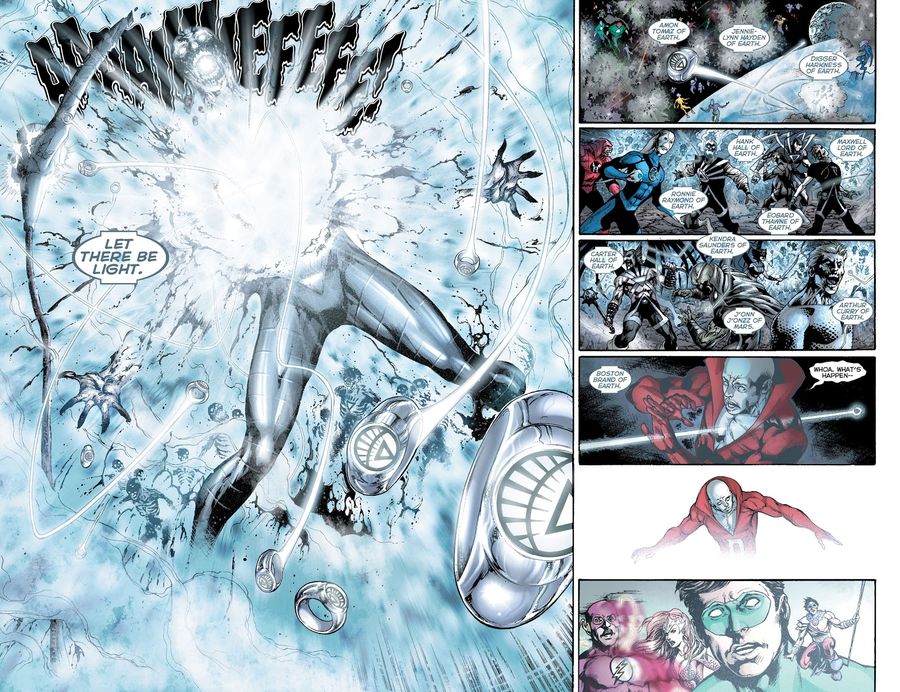
The living embodiment of life itself — the first living thing in the universe, born when light burst into the primordial dark. It slumbered for billions of years deep within the Earth, the hidden source from which all life — and every color of the emotional spectrum — ultimately flows. When death itself rose against creation, the Entity awoke and chose champions to wield the white light. It is not an emotion but the wellspring all emotions spring from.
Rings can boost or drain one another. In Green Lantern (2005) #36, Saint Walker’s blue ring raises the charge on Hal Jordan’s green one. Hal’s active green light also strengthens the Blue Lanterns’ abilities. DC’s Blue Lantern guide.
The cards include individual scenes from Rage of the Red Lanterns, Agent Orange and Tales of the Corps.
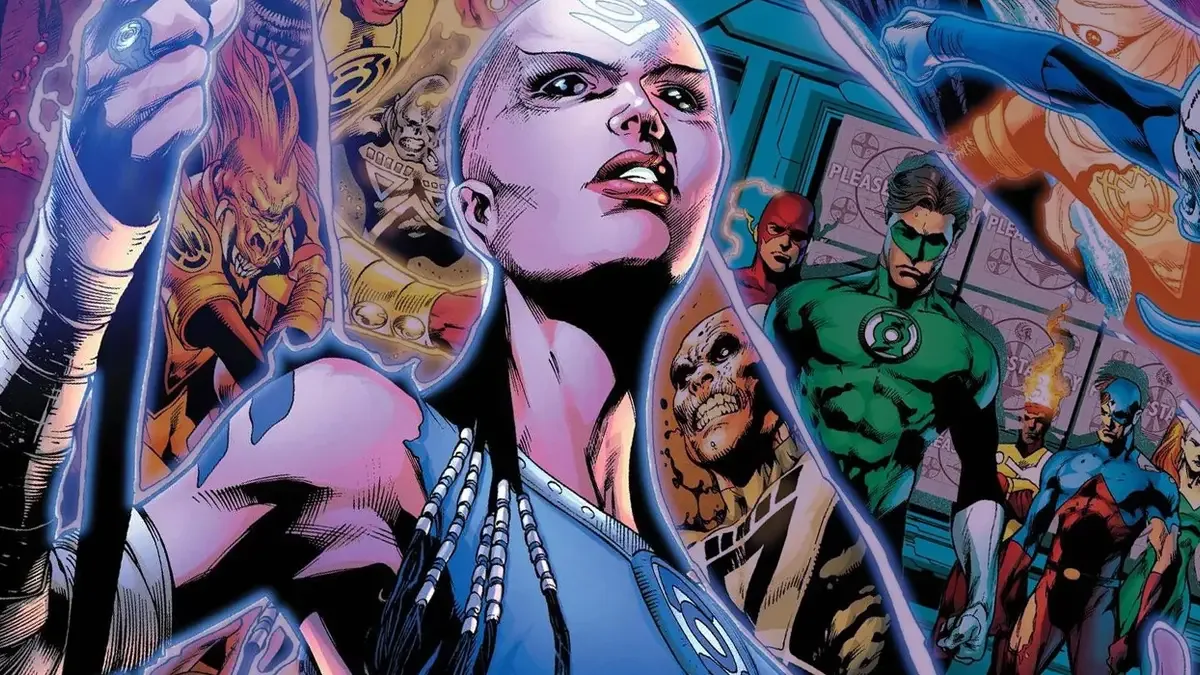
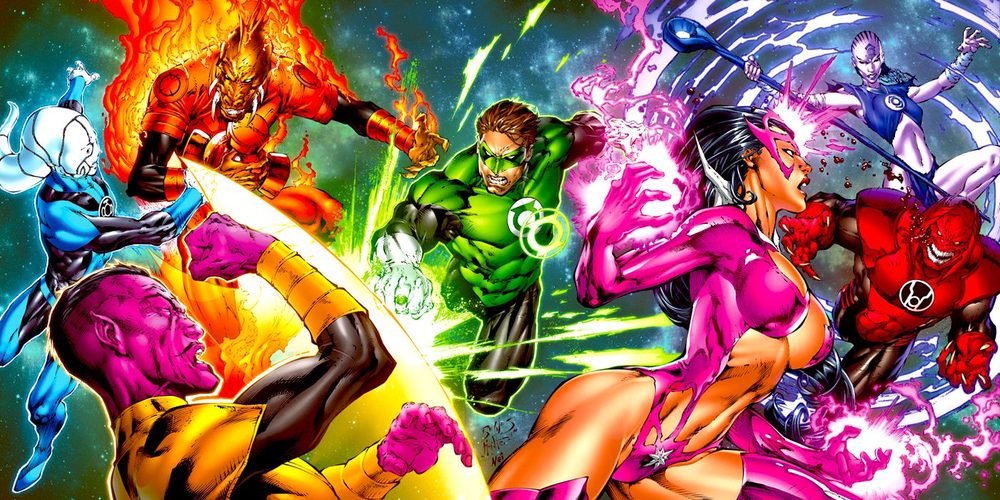
Every Corps at war together — Blackest Night-era artwork.
Blue + Green— hope supercharges willpower
While Hal is nearby, Saint Walker and Brother Warth use blue light to help a dying sun. This scene and the boost to Hal’s ring show the two lights working both ways. Read Green Lantern #36.
Blue vs. Red— hope soothes rage
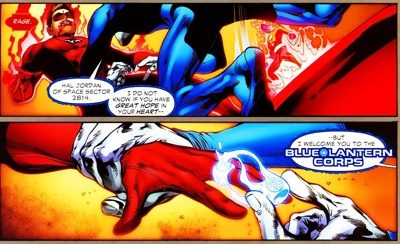
Saint Walker uses a blue ring to release Hal from the hold of a red one in Green Lantern #38 (2009). Hope can help a wearer survive removal of a red ring, an intervention DC describes in its Blue Lantern guide.
Blue vs. Yellow— hope drains fear
In Green Lantern #38, the Blue Lanterns draw on nearby green light and drain Sinestro Corps rings. That scene concerns fear-powered equipment. The yellow impurity concerns what green rings could affect in earlier stories.
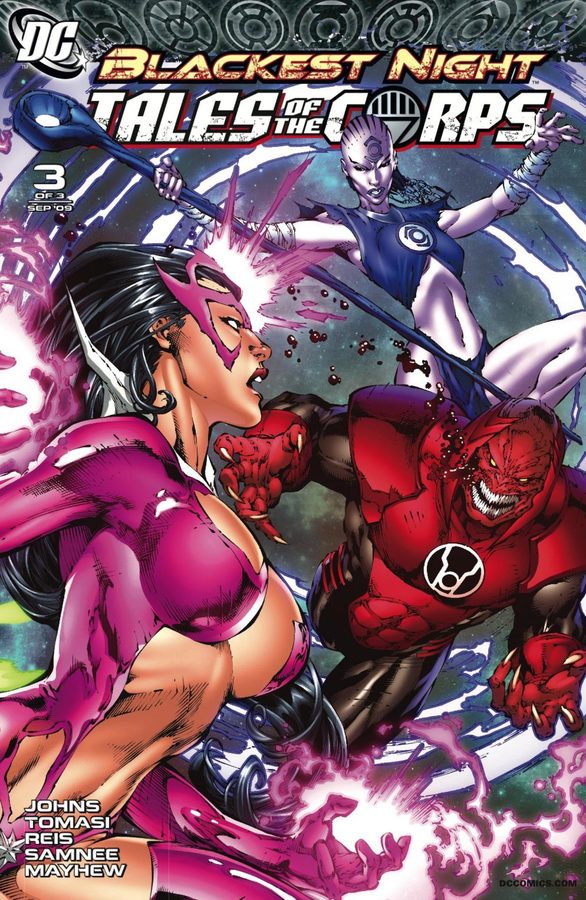
Blackest Night: Tales of the Corps #1–3 (2009), joined main covers. Ed Benes (cover pencils); Rob Hunter (cover inks); Nei Ruffino (cover colors). Artwork source & details.
Credits refer to the illustrations shown here. Open a record for sources, adaptations and unresolved details. Some artwork and source pages contain story spoilers.
Red — Red Lanterns (2011) #1, main-cover crop. Ed Benes (cover pencils); Rob Hunter (cover inks); Rod Reis (cover colors).
Orange — Green Lantern (2005) #39 (2009), main-cover artwork with a changed background. Ivan Reis (cover pencils); Oclair Albert (cover inks); Nei Ruffino (cover colors).
Yellow — Composite using Sinestro foreground from Green Lantern: Sinestro Corps Special #1 (2007), story page 4. Ethan Van Sciver (foreground illustration); Moose Baumann (foreground colors).
Blue — Hal Jordan and the Green Lantern Corps #14 (2017), main cover crop. Rafa Sandoval (cover pencils); Jordi Tarragona (cover inks); Tomeu Morey (cover colors).
Indigo — Blackest Night #3 (2009), emotional-spectrum explanation spread, cropped detail. Ivan Reis (interior pencils); Alex Sinclair (interior colors).
Parallax — Green Lantern (2011) #35 (2014), Monster variant cover without trade dress. Ivan Reis (cover artist (publisher credit)); Joe Prado (cover artist (publisher credit)).
Ion — Ion: Guardian of the Universe #1 (2006), cropped main cover. Jeromy Cox (cover artist (publisher credit)); Ivan Reis (cover artist (publisher credit)); Marc Campos (cover artist (publisher credit)).
Adara — Green Lantern (2005) #52 (2010), emotional-entity spread around White Lantern Sinestro. Doug Mahnke (interior pencils).
Proselyte — Green Lantern (2005) #52 (2010), emotional-entity spread around White Lantern Sinestro. Doug Mahnke (interior pencils).
Life Entity — Blackest Night #8 (2010), white-ring resurrection spread. Ivan Reis (pencils); Alex Sinclair (colors).
Lights Interact — Blackest Night: Tales of the Corps #1–3 (2009), joined main covers. Ed Benes (cover pencils); Rob Hunter (cover inks); Nei Ruffino (cover colors).
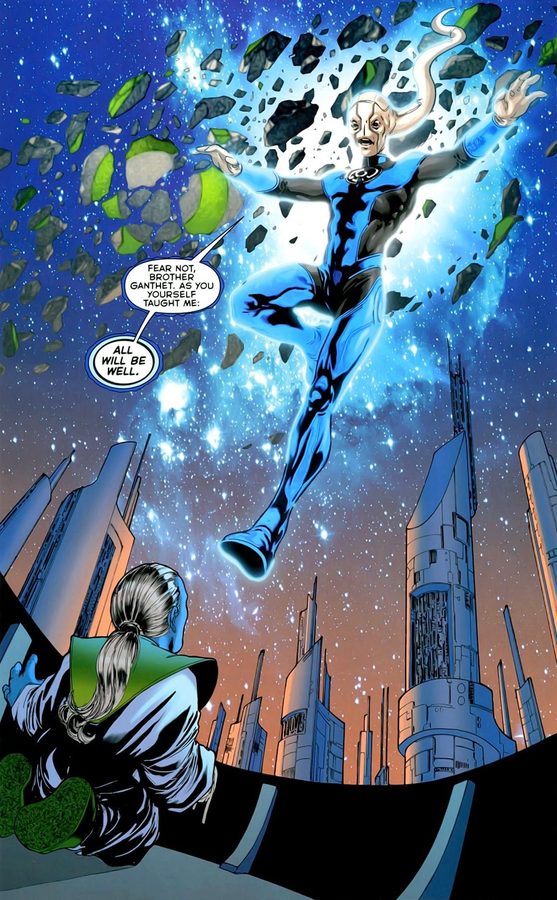
Blue Green — War of the Green Lanterns: Aftermath #1 (2011), Saint Walker and Ganthet interior panel. Miguel Ángel Sepúlveda (interior pencils and inks); Rain Beredo (interior colors).
Blue Red — Green Lantern (2005) #38 (2009), interior crop. Ivan Reis (pencils); Oclair Albert (inks); Nei Ruffino (colors).
Indigo All — Blackest Night: Tales of the Corps #3 (2009), main cover. Ed Benes (cover pencils); Rob Hunter (cover inks); Nei Ruffino (cover colors).